Pet Stain Removal for Furniture: Spotless & Cozy Guide
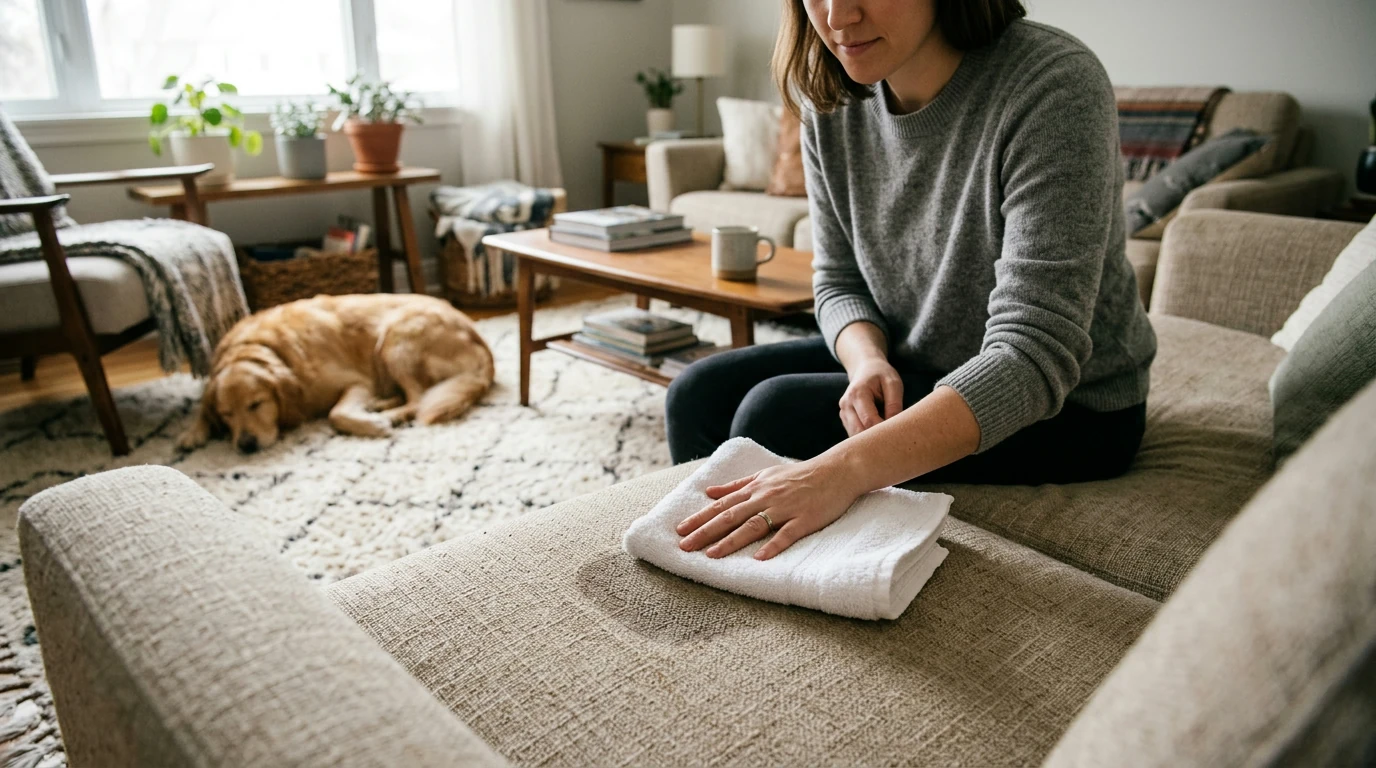
Pet accidents can interrupt a cozy afternoon, but a calm response makes cleanup more manageable. The goal is to address the mess without driving it deeper into the upholstery or exposing your pet to cleaning products. Our Spotless & Cozy digital guide offers a dedicated resource for tackling pet stains on furniture, while these practical precautions can help you plan your next steps.
Start with the furniture, not the stain
Before you reach for a cleaner, check the furniture manufacturer’s care label. Upholstery materials and construction vary, and a treatment that works on one fabric can discolor or damage another. Follow the manufacturer’s instructions for approved cleaning methods, including any limits on water or solvents.
Once you have selected a suitable product, test it on a hidden area and follow its label directions. Let the test area dry so you can look for changes in color or texture before treating a visible spot. A cleaner’s claim that it handles pet stains does not automatically mean it is appropriate for your furniture.
If the upholstery is delicate, the care instructions are unclear, or the damage is extensive, contact the manufacturer or a professional upholstery cleaner. Getting advice before experimenting can help you avoid making the problem harder to address.
Responding to a fresh accident
For fresh liquid, gently blot the area with a clean, absorbent cloth. Press rather than scrub, and move to a clean part of the cloth as it absorbs moisture. Rubbing can spread the stain or push it farther into the fabric.
After blotting, check the care label before applying a cleaner. Avoid saturating the upholstery: excess moisture can reach the padding beneath the surface and may be difficult to dry. Apply any product only as its directions recommend, and allow the treated area to dry according to those instructions.
Keep your pet away from the treated surface until the product label says it is safe to return. If the label calls for ventilation or other precautions, follow those directions too.
A quick furniture-care checklist
| Situation | First step | Precaution |
|---|---|---|
| Fresh liquid | Blot with a clean cloth | Avoid rubbing or soaking the upholstery |
| Dried or persistent stain | Check the furniture care instructions | Test a suitable cleaner in a hidden spot |
| Delicate or uncertain fabric | Consult the manufacturer or a professional | Avoid experimenting with unverified treatments |
A dried or persistent stain may need a different approach from a fresh spill. Resist the urge to apply more product than directed or repeat treatments without allowing the recommended time between applications. If the stain remains or the material changes appearance, a professional can help you decide what to do next.
Choosing a cleaner with pets in mind
Choose a product intended for both the type of stain and the furniture material. Enzyme cleaners are designed for certain organic stains, but they are not automatically suitable for every upholstery fabric. Read the cleaner’s directions alongside the furniture care instructions, then test it in an inconspicuous place.
Never mix cleaning products, and store them out of your pet’s reach. The EPA Safer Choice program provides information about products that meet its ingredient criteria; you should still confirm that any product is appropriate for your furniture and use it as directed.
If you suspect your pet has been exposed to a cleaning product, contact your veterinarian or ASPCA Animal Poison Control promptly. Keep the product container available so you can share its ingredients and label information.
A guide for a more comfortable cleanup routine
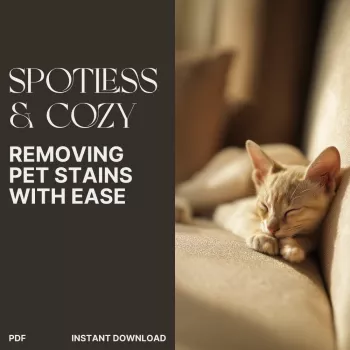
When you want a dedicated resource for handling furniture stains, our Spotless & Cozy pet stain removal guide is a digital download focused on removing pet stains from furniture. It is listed at $11.99, so you can purchase it as a resource for your household without adding another physical book to your shelves.
Keeping a comfortable home also involves everyday expenses beyond cleanup supplies. If you are reviewing those costs, our Smart Ways to Save on Utilities guide offers a separate resource focused on cutting utility costs and improving efficiency.
Keeping furniture ready for everyday life
Our team recommends keeping clean absorbent cloths and a fabric-compatible cleaner accessible so you can respond promptly. Store the cleaner securely away from pets, and keep its label intact for application and safety instructions. A small supply of clean cloths can also make it easier to blot without reusing a damp or soiled section.
Washable furniture covers may offer another layer of protection where appropriate. Follow each cover’s care instructions, and let it dry fully before putting it back on the furniture. A cover can make routine cleanup more convenient, though it does not replace checking the furniture if moisture reaches the upholstery underneath.
Finally, pay attention to changes in your pet’s habits. If accidents become frequent or are a new behavior, consult your veterinarian. Addressing a possible underlying issue is just as important as caring for the furniture.
FAQ
What should I do first when a pet stains furniture?
Gently blot fresh moisture with a clean cloth, then check the furniture care label. Before treating the stain, test a suitable cleaner in a hidden area.
Can I use an enzyme cleaner on any upholstery?
No. Check both the cleaner’s directions and the furniture care instructions, then test it on an inconspicuous spot.
Is Spotless & Cozy a physical book?
No. It is a digital download focused on removing pet stains from furniture.










Leave a comment