How to Organize an Entryway for a Busy Home
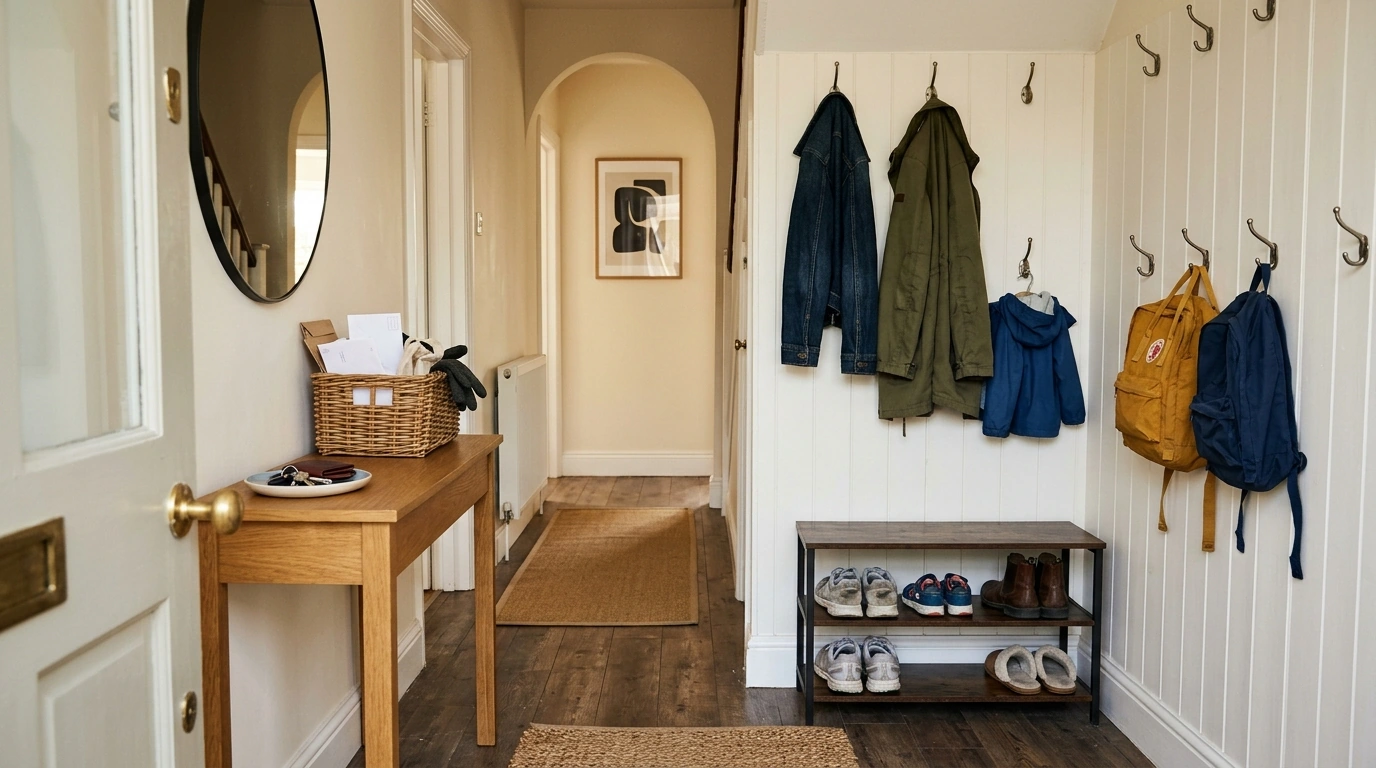
A busy entryway has a lot to handle: shoes come off, bags land, mail arrives, and keys need to be found again on the way out. When everything competes for the same small space, even a quick departure can feel more hectic than it needs to.
We like to start with a simple goal: make the things you use every day easy to find and easy to put away. Our Effortlessly Organized Entryway eBook offers a practical guide for creating a more manageable arrival and departure routine, even in a busy household.
Start With Your Household’s Daily Routine
Before you shop for baskets or rearrange furniture, notice what actually passes through your door. Your list might include work bags, school backpacks, dog leashes, coats, shoes, keys, and items that need to be returned. A setup built around those everyday movements is more useful than one designed for things you rarely touch.
Consider everyone who uses the space. Children may be more likely to hang up their own bags when hooks are within reach. Adults might prefer a small landing spot for keys that is separate from children’s belongings. If someone uses a mobility aid or carries a stroller through the entryway, leave enough unobstructed room for them to move comfortably.
Next, remove anything that belongs elsewhere. Put away old paperwork, relocate extra sports equipment, and move out-of-season accessories to a closet or another storage area. Once the space holds only what you need near the door, you can see which storage solutions will genuinely help.
Give Everyday Essentials a Place
Think of your entryway as a few small zones rather than one catchall. You don’t need a separate piece of furniture for each category; a tray, a row of hooks, and a basket can do plenty of work together. Choose options that fit the space you have, and leave room to open the door and walk through without stepping around clutter.
| Zone | Items | Practical option |
|---|---|---|
| Arrival | Keys and sunglasses | Small tray or wall-mounted holder |
| Footwear | Everyday shoes | Washable mat or narrow rack |
| Outerwear | Coats and bags | Hooks at accessible heights |
| Departure | Mail and items to return | Labeled basket or folder |
Keep the most frequently used items in the easiest spots. A small tray near the door can make keys visible at a glance, while a narrow rack can keep everyday shoes together without taking over the floor. If wall space is available, hooks can hold coats and bags without requiring a bulky cabinet.
Give outgoing items a defined home, too. A folder for mail or a basket for returns can serve as a reminder to take those things with you. Empty it regularly so it remains a useful departure point rather than another place where miscellaneous items collect.
Seasonal extras can live elsewhere until they are needed. For example, keep the current season’s jackets by the door and move heavier coats or spare footwear to a closet. That leaves your entryway ready for the items your household reaches for now.
Make the Setup Work for a Busy Home
The best system is one your household can maintain on an ordinary day. Avoid filling every hook and basket to capacity; a little open space makes it easier to put something away when you come home in a hurry. If a container regularly overflows, reduce what it holds or give the category more appropriate storage.
Labels can help when several people share the space, but they aren’t essential. You might assign one hook per person or designate a shelf for each household member’s most-used shoes. Keep the rules simple enough that everyone knows where things go without having to sort through a complicated system.
Build a short reset into a routine you already have. After dinner or before bed, return keys to their tray, hang up bags, and move shoes back to their spot. A couple of minutes can make the next morning easier. Revisit the arrangement when school schedules, weather, or household needs change.
Keep safety in mind as you arrange the space. The National Institute on Aging recommends keeping walkways clear to help prevent falls at home. Place storage where it won’t obstruct the path, and avoid leaving loose items underfoot.
Explore the Effortlessly Organized Entryway eBook
If you want more guidance as you plan your space, our Effortlessly Organized Entryway eBook is a practical guide to organizing a home entryway efficiently. It’s a useful starting point when you want arrivals and departures to feel more manageable. Explore the guide for $15.99 USD.
For households managing pet messes beyond the front door, our Spotless & Cozy pet stain removal guide offers a separate resource focused on furniture. Keeping an entryway organized is one part of making a busy home easier to care for.
FAQ
How can I organize a small entryway?
Prioritize the items you use most, use vertical space where appropriate, and keep the walkway clear. A few hooks and a small tray can provide useful storage without crowding the floor.
What should I keep near the front door?
Keep daily essentials such as keys, commonly worn shoes, and outerwear near the door. Store less-used and out-of-season items elsewhere.
How do I keep an entryway organized with a busy household?
Give common items easy-to-reach homes and make sure everyone knows where they belong. Add a short reset to an existing daily routine so clutter doesn’t build up.








Leave a comment