Smart Decorating Ideas for Tiny Rooms and Studios
A tiny room can feel comfortable and functional without being packed with miniature furniture. The key is to plan around your routines, protect the paths you use every day, and choose pieces that earn their space. Our space-saving eBook, Smart Decorating Solutions for Tiny Rooms, offers guidance for styling apartments and studios with those priorities in mind. For more guidance, see Books to Make Apartment Living More Joyful.
Start With How You Use the Room
Before moving furniture or shopping for storage, list what the room needs to do. You might sleep, work, eat, relax, and host friends in the same studio. In a small bedroom, the priorities may be simpler: a comfortable sleeping area, a place to dress, and storage for daily essentials. For further reading, see How To Furnish a Small Apartment: Living Room Tips.
Next, measure the room and sketch a basic floor plan. Mark doors, windows, outlets, vents, and any features you cannot move. Note which way doors swing and where you need clear walking paths. Measure the furniture you already own, too; a piece that feels oversized in one position may work better against another wall.
Pick the changes that would make your routine easier. If you work at the dining table every day, a better work surface may matter more than extra display space. If clutter collects by the door, a few well-placed hooks could make the biggest difference.
Choose Furniture That Works Harder
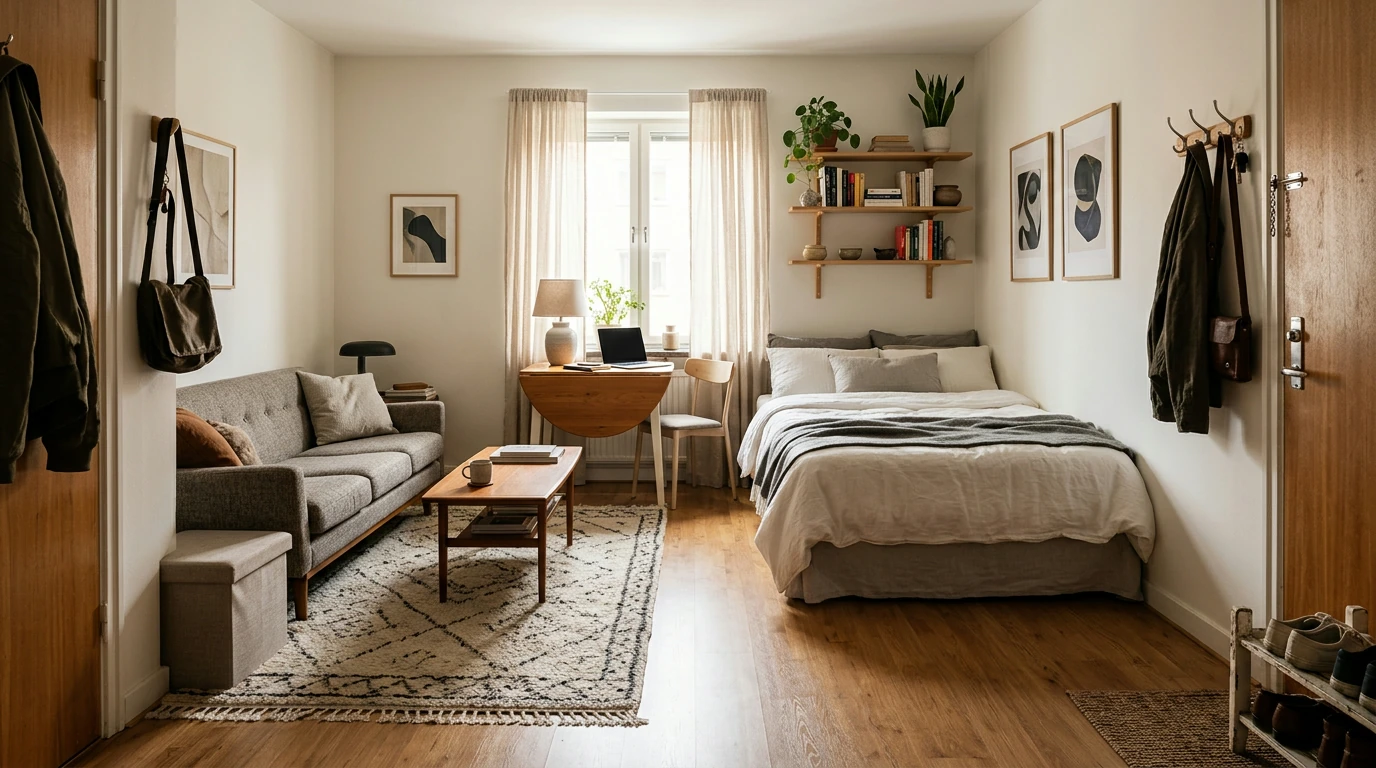
Multipurpose furniture can reduce the number of separate pieces you need. A storage ottoman can provide a seat and a place for blankets, while a drop-leaf table can expand when you have company and fold down afterward. A table that works for both meals and a laptop can be useful, provided it is comfortable for the time you spend at it.
Compare each piece with your floor plan rather than relying on appearance alone. Allow space to pull out a chair, open drawers, and walk around the furniture comfortably. For folding pieces, measure both the compact and fully extended footprints.
Space-Saving Furniture Ideas
| Piece | Possible use | What to check |
|---|---|---|
| Storage ottoman | Seating and concealed storage | Accessible opening and suitable height |
| Drop-leaf table | Dining or work surface | Clearance when fully extended |
| Bed with under-bed storage | Sleeping and storage | Room to access drawers or bins |
| Wall-mounted shelf | Vertical storage or display | Wall material and appropriate fixings |
Before committing to a large item, use painter’s tape to mark its footprint on the floor. Live with the outline for a day or two and see whether it interferes with your usual routes. Remember to account for delivery access through hallways, stairways, and doorways.
Create Zones Without Closing In the Space
In a studio, zones give different activities a sense of place without requiring permanent walls. A rug can anchor a seating area, while a small lamp beside a desk can define a work spot. Positioning a sofa with its back toward a dining area can create a subtle boundary while keeping the room connected.
When privacy is not essential, try low or open dividers that allow light to travel through the space. Keep frequently used items close to their purpose: work supplies near the desk, dishes near the dining area, and a basket for throws beside the sofa. This reduces unnecessary trips and makes it easier to reset the room.
For more ideas on living comfortably in compact spaces, explore Apartment Therapy.
Make Storage and Styling Work Together
Walls offer useful storage when floor space is limited. Shelves and hooks can hold books, bags, or accessories, but keep everyday necessities within easy reach. Match anchors and fasteners to the wall material and the weight you plan to store; if you rent, confirm which installations your lease permits.
Group small objects in baskets or containers so surfaces are easier to clear. Choose containers that fit their shelves and are easy to pull out. Leave some open space, too: storage does not need to fill every available inch to be effective.
For a cohesive look, repeat a few colors or materials across the room. Layer overhead, task, and accent lighting so you can adjust the atmosphere for work or relaxation. The U.S. Department of Energy’s lighting guide explains efficient bulb choices that can help you manage energy use.
Put Your Plan Into Practice
Choose one area to improve first. Rearrange what you own, test the layout during your normal routine, and make a short list of anything that would solve a remaining problem. This approach helps you avoid buying furniture that looks useful but does not fit the way you live.
For more apartment and studio styling guidance, explore our Smart Decorating Solutions for Tiny Rooms eBook. It is listed at $20.99; the price is subject to change.
If you are also looking for ways to manage household energy costs, our Smart Ways to Save on Utilities guide offers a separate starting point for improving efficiency. Our team recommends tackling your space one practical change at a time, so you can see what works before adding more.
FAQ
How can I make a small room feel less crowded?
Keep walkways clear, choose furniture sized for the available floor space, and group or put away small items to reduce visual clutter.
How do I divide a studio apartment into useful zones?
Use furniture placement, rugs, and lighting to distinguish areas for different activities. Low or open dividers can add separation without blocking as much light.
What should I measure before buying space-saving furniture?
Measure the intended footprint and the routes needed to bring the piece inside. Include the clearance required for doors, drawers, chairs, and any folding or extending parts.











Leave a comment